CHAPTER XV: A History of Jefferson County, Texas
Jefferson County and the Civil War: The Road to Appomattox, 1863-1865
By W. T. Block
The year 1863 proved to be the crucial one in the Confederacy’s fight for survival. Within a two-months period, General Robert E. Lee won the last of his great victories at Chancellorsville and suffered his greatest defeat at the battle of Gettysburg. A simultaneous Union triumph at Vicksburg partitioned the South and freed a large Federal army for service elsewhere. It was this reservoir of soldiers that supplied General Nathaniel P. Banks of New Orleans with the forces that he needed for the invasion of Texas.
Until 1863, Jefferson County’s defense had been borne by Spaight’s Battalion. After the recapture of Galveston, four companies of Colonel W. H. Griffin’s 21st Battalion, Texas Infantry, were transferred to Sabine Pass. Spaight’s Battalion was ordered to Galveston,1 but in May, 1863, a Union army advancing in the vicinity of Louisiana’s Bayou Teche necessitated the transfer of Colonel Spaight and five of his companies to that sector.2 Company B remained aboard the Uncle Ben at Sabine Pass, and Captain Odium’s Company F, First Texas Heavy Artillery, was still on the gunboat Josiah Bell.3
In March, 1863, Major Julius Kellersberg was dispatched to Sabine Pass with thirty engineers and 500 slaves.4 His instructions were to construct a new Fort Sabine, a triangular fortification with six gun emplacements and bombproofs built into its sawtooth front.5 Kellersberg selected a prominent point opposite the channel exits from the oyster reef, a site which would permit the fort’s guns to traverse a 270-degree arc. Work progressed feverishly for four months. For armament, four guns were removed from Fort Grigsby and the Sabine River, and the river forts were abandoned. Another battery, the two 32-pounders which had been spiked and buried at the previous fort, was repaired at the Galveston foundry and later, remounted and test-fired in August, 1863.6 The new fortification soon became known as Fort Griffin, named for the commander of the 21st Texas Battalion.
As the initial construction work at Fort Griffin progressed, Commander Abner Read of the Union blockader New London aspired to recapture the Sabine Pass in a surprise attack and take the anchored gunboats Uncle Ben and Josiah Bell. He planned to use the vessels to destroy Confederate shipping on Sabine waters and burn all ferries and bridges along the supply routes to Louisiana.7 In furtherance of his plan, Read sent a scouting patrol daily by whaleboat to the abandoned Sabine Lighthouse, the 80-foot height of which afforded “a fine view of Sabine City and the surrounding country.”8
Colonel Griffin’s first knowledge that the blockaders were using the lighthouse as an observation point came on April 10, when Captain Charles Fowler, who commanded Confederate gunboats at Sabine, led a four-man reconnaissance squad to Lighthouse Bayou, where they were surprised and captured by a Federal patrol.9 Confederate engineers noted light reflections emanating from the lighthouse tower,10 and on April 17, a Union whaleboat and crew were observed rowing inland in the Pass.11
Before daylight of the following day, Colonel Griffin sent Captain Samuel Evans and detachments from Companies C and D to hide under the lightkeeper’s residence and wait for the Federals. Later, two Union whaleboats and crews, including Commanders Read and D. A. McDermot and the defector, James G. Taylor, landed and approached the lighthouse. An advance party of three Bluejackets surrendered on demand, but the remainder retreated, firing as they fled to their boats.
Four members of Commander McDermot’s crew were killed by a hail of Confederate musketry and six others surrendered. Mortally wounded, McDermot died later in Sabine City. The other whaleboat escaped, although all but one man aboard were wounded. Taylor was severely injured, Read lost an eye, and thereafter, the blockade commander abandoned his espionage activities and his plan to recapture Sabine.12
In April, 1863, the Reverend Lommis, chaplain of the 21st Texas Battalion, complained by letter that the sick and wounded of his unit were “out of reach” of all Confederate hospitals and medical facilities.13 While it is not known exactly when the Sabine Post hospital was established, the situation at Beaumont was rectified immediately when Confederate surgeon D. T. Inglehart leased the county courthouse for use as a hospital.14 When Inglehart was transferred to Houston, he was replaced by Edward A. Pye, an assistant surgeon whose published letters provide much information about Civil War life in Beaumont.15 In August, 1864, Dr. Pye wrote that “we have not had a death in the Hospital since Dr. I. [Inglehart] left us, though we have generally had the house full.” Ten days later, the physician added that “the sickness is becoming more serious— I lost a case of congestion in the Hospital and there are several on hand. They appear to be very intractable-I have had some practice outside too-one in the country some ten Miles, all of the same kind.”16
In October, 1863, the inspector general’s report was highly critical of the military hospital at Sabine Pass. The inspecting officer observed that “the hospital is not clean and there are no comforts in it; the men chiefly rest on the floor, without bed sacks or any kind of pallets.” Inspector Ben Allston noted that the regimental physician17 was sick “at the time of inspection,” but that “an energetic and faithful surgeon would have accomplished more than what I there saw.”18
Nevertheless, the performance of Jefferson County’s Civil War physicians, both civilian and military, was an outstanding service to humanity. Beaumont physicians G. W. Hawley and Sylvester Mansfield died of yellow fever in 1862, instead of fleeing as others did.19 It is no mystery why the record of Confederate surgeon George H. Bailey has become entwined with legend. Prior to the battle of Sabine Pass in September, 1863, Bailey “had spent the night in the hospital in town, attending some fifteen or twenty sick men,” when the first Union bombardment began at daylight.20 The physician gathered all the bandages and medicines he could carry, rode horseback under fire to the fort, where due to a lack of officers, he assumed command of a battery of guns.21 For forty-eight hours, Bailey, who “behaved with great coolness,” labored to save the Union casualties, who were mostly scald victims.22 In May, 1864, surgeons Bailey and Gordon performed about twenty major operations and amputations following the battle of Calcasieu Pass.23
The record of Doctor James D. Murray, Sabine’s only physician after 1858, is equally impressive. At the outbreak of war, Murray enlisted as assistant surgeon in the Sabine Pass Guard, which became Company B, Likens’ Battalion, but he continued his civilian practice as well. By 1863, he had been discharged from military service.24
In August, 1862, Murray cared for the civilian and military victims of yellow fever until help arrived from Houston. However, he apparently failed to diagnose the disease correctly at the epidemic’s beginning.25 In January, 1863, Murray, whom Dr. George Holland called “an intelligent practicing physician,”26 accompanied surgeon Bailey aboard the captured Morning Light to succor the Federal wounded.27 On September 8, 1863, Dr. Murray duplicated Bailey’s feat, riding horseback through the early bombardment to evacuate a convalescent patient from Fort Griffin.28 A Confederate report credited Murray, who “behaved with great coolness and gallantry,” with riding out of the fort while under fire to seek reinforcements, after which he tended to the Union casualties.29 On April 18, when the wounded Commander McDermot was brought to Sabine City, Murray strove for hours “to relieve his sufferings and to save his life but in vain.”30
By 1863, the privations caused by the blockade and by inflated currency were being felt in Jefferson County. It was further aggravated by the black market and speculative activities of the Confederate quartermaster personnel. While in Beaumont, a Union prisoner of war reported buying “a greasy breakfast for a dollar and a half .. . sugar for a dollar a pound . . . and watermelons for a dollar a piece.”31 Dr. Pye wrote in 1864 that leaf tobacco was worth $30 a pound at Beaumont and that “the Q. M. [quartermaster] bought a lot some time ago, sold it and made about 1,000 Dollars-but the man he sold it to made $15,000.”32 By December, 1864, Pye reported that chickens could not be purchased with money at Beaumont, and that a single chicken cost $10 when bartered for with flour. “I bought two sacks the other day for $1,200,” he added, “to buy chickens and eggs for the sick.”33
As early as August, 1862, the Jefferson County court voted to provide relief to the indigent families of soldiers who had enlisted in the Confederate army. Agents were to be appointed to accept contributions and to issue rations.34 In February, 1863, the county court voted to issue $5,000 in county script, placing $3,500 at the chief justice’s disposal for the purchase of corn and bacon. H. Cortes Keith became the county’s purchasing agent in charge of the relief program.35 John Patridge, John K. Robertson, Sterling Spell, Wesley Garner, and Emile Broussard were appointed to administer the relief program in their respective precincts.36
As the indigent relief load increased, the court authorized in August, 1863, the issuance of ten-year, $500 bonds to finance the program. During the same month, state funds totalling $2,503 were received for relief of the soldiers’ families.37 The court also ordered that county funds be loaned to soldiers for payment of their land taxes, and in November, 1863, levied a special 75¢ per $100 valuation indigent tax.38 The tax continued until April, 1865, at which time the commissioners rated Confederate money at twenty-five for one in specie state treasury warrants, and ordered “that corn be received on said tax at 75¢ per bushel and sell at 5¢ per pound.”39 By June, 1865, eighty-five families, about one-half of the population, were on the indigent rolls.40
Because of extensive troop and supply movements between Texas and Louisiana, the role of military transportation in Jefferson County was a vital function. Despite the inferior rail construction of the antebellum era, the Texas and New Orleans railroad from Houston to Beaumont remained operative throughout the war.41 However, there were frequent derailments along the line.42 It would appear that the rebuilding of the Taylor’s Bayou bridge could have kept the Eastern Texas railroad to Sabine Pass open during the war. In October, 1863, Colonel V. Sulakowski ordered that the railroad be repaired,43 but his instruction was not implemented. Since the rails south of Taylor’s Bayou had been removed by 1864, it is probable that a deteriorated or sunken railroad bed through the marshes was the reason.44
Because of the inoperative rail systems to Sabine and in Orange County, the Confederate steamboats were used to supply Sabine as well as Niblett’s Bluff, Louisiana. Other than the gunboats Bell and Uncle Ben (the only one owned by the Confederate government), the Sabine tenders included the steamers Florilda, Roebuck, Ace, Sunflower, Grand Bay, Jeff Davis, and Dime.45
The work horse of the Confederate tenders was the 220-foot Florilda, used principally between Beaumont and Niblett’s Bluff.46 The steamers Dime and Ace were small, and since both could navigate Black and Johnson’s Bayous, they were frequently used to ferry cavalrymen to and from south Calcasieu Parish, Louisiana. When not utilized thus, the Dime and her barge transported drinking water to Sabine Pass.47
As of 1863, the Sabine steamers were showing the effects of age and the lack of maintenance. One “rickety old cottonclad,” a side-wheeler [Uncle Ben] which transported prisoners of war to Beaumont after the battle of September 8, had a broken paddle wheel, and had to be steered by “keeping the helm hard a starboard.”48 Repairs to the vessels came only as a result of the invasion threat of that fall. In September, four marine engineers, who were transferred from Galveston, repaired the captured and badly-damaged Sachem and Clifton in “less than ten days.”49
On October 27, 1863, the report of the Texas marine department listed the gunboat Uncle Ben as being “in good order,” indicating that the vessel had probably been overhauled. The steamer Sunflower was “undergoing repairs at Beaumont.”50
The Jeff Davis was in a shipyard at Orange, awaiting a new shaft from the Houston foundry.51 The steamers Roebuck and Grand Bay were in bad running order, but could be operated for short periods of time.52
Despite involvement in two battles, the only casualties suffered by the gunboats Bell and Uncle Ben resulted from accidents. In April, 1863, a gun explosion on the Bell killed two men,53 and the following October, a boiler explosion killed four more on the same vessel.54 In January, 1864, a seaman reported that all was quiet aboard the Josiah Bell and that the crew hoped some action would develop.55
After their capture, the Sachem and Clifton continued as gunboats for a brief period. General E. Kirby Smith received a “blank commission” from Richmond to fit out either or both vessels as commerce raiders, and sent a Lieutenant Wharton to Sabine to inspect the vessels.56 Apparently, their use as cruisers was not feasible, for the gunboats were converted to blockade-runners. On March 21, 1864, while attempting to escape with 700 bales of cotton, the Clifton ran aground and was burned to prevent capture.57 The Sachem, renamed the Clarinda, was sold at auction and made one or more successful voyages. A newspaper reported in September, 1864, that the Clarinda was loaded at Sabine and awaiting an opportunity to run the blockade.58
As of June, 1863, Captains Keith’s and Odium’s companies were still serving as artillerists on the gunboats Bell and Uncle Ben.59 When Sabine’s new fortification was armed with six guns late in August, Captain Odium’s company occupied Fort Griffin and were soon engaged in gunnery practice.60 The transfer to Sabine of Griffin’s Battalion, gradual at first, was completed in May when Colonel Spaight’s troops were transferred to Louisiana.61 Griffin’s 21st Battalion included six companies under Captains Felix McReynolds, R. V. Cook, W. J. Carson, Samuel Evans, J. H. Deegan, and I. M. Givens. On August 10, 1863, Major H. A. Hamner, the 21st Battalion executive officer, resigned, and Captain McReynolds was promoted to replace him.62
Even prior to the fall of Vicksburg, it was apparent that an invasion of Southeast Texas was imminent. In April, 1863, General Richard Taylor’s army was slowly retreating before a Union force near Opelousas, Louisiana.63 The surrender of Vicksburg in July released a large Federal army and several Mississippi River gunboats which could be utilized for invasion purposes. General John B. Magruder was sufficiently aware of the threat, for in July, 1863, he ordered a defense plan for Orange County,64 and on September 4, directed Colonel Sulakowski to fortify Sabine Pass “without the least delay, as it is expected that the enemy will make a demonstration at that point at an early day.”65
This knowledge notwithstanding, it appears that the general committed a serious tactical blunder, one which may account for Magruder’s overcautious behavior for the 60-day period after the battle of Sabine Pass. About September 1, the commanding general ordered Griffin’s Battalion to the Northern Sub-district, and when an invasion attempt was made at Sabine a week later, four companies of the 21st Battalion were at Millican, Texas, and only two companies were at Beaumont.66
During August, 1863, four companies of the battalion, all of whom were from the Northwest Texas frontier, were on the verge of mutiny. Apparently, the transfer was Magruder’s effort to placate Griffin’s troops. The general reported that the cause of the mutiny stemmed from Indian depredations near the soldiers’ homes, but it is probable that the underlying reason was Colonel Griffin’s extreme disciplinary measures.67
In August, 1863, Henry W. Halleck, chief of staff of the United States army, vetoed General Nathaniel P. Banks’ plan for offensive action against Mobile, Alabama in favor of an invasion along the Texas coast.68 Deferring to his superior’s orders, Banks, in his letter of instruction to his field commander, General William B. Franklin, explained that Halleck considered “there are important reasons, in addition to those of a purely military character, for the immediate occupation of some important point in the State of Texas.”69 Banks referred to a show of strength nearer to Mexico, then occupied by the French forces of the Emperor Maximilian.70
Jefferson County was the logical selection for such an amphibious operation. Its defenses were known to be considerably less than those of Galveston. It was also much closer to New Orleans and to Brashear (Morgan) City, Louisiana, the Union-occupied railhead which would supply the Federal expedition.71
The command of the naval assault against Sabine Pass was assigned to Lieutenant Frederick Crocker, whose squadron had captured the Pass in 1862. In preparation for the debarkation of the Union’s Nineteenth Army Corps, four shallow-draft gunboats, the Clifton, Sachem, Granite City, and Arizona, were detailed to silence Fort Griffin’s batteries.72 Generals Franklin and Godfrey Weitzel commanded an invasion force of 5,000 infantry and supporting artillery aboard nineteen transports.73 Franklin’s objective was to seize a point along the Texas and New Orleans railroad (Banks’ letter suggested that “Beaumont is probably the preferable point”) and to reconnoiter “in the direction of Houston.”74
From the beginning, the expedition to Sabine was plagued by a series of errors which robbed it of the element of surprise.75 During the thirty-six hours preceding the attack, the Confederate defenders witnessed the signal lights of the offshore armada and telegraphed the information to General Magruder in Houston.76 At daylight on September 8, Lieutenant Crocker crossed the bar and fired twenty-six shells at the Confederate battery. Receiving no return fire, he withdrew for consultations with the expedition’s leaders. At eleven o’clock, the cottonclad Uncle Ben made a feint southward in the Pass, but retreated after being fired upon by the Sachem. About midafternoon, the Federal gunboats, two in each channel, steamed toward Fort Griffin as the invasion began.77
Captain Odium, who temporarily commanded Sabine Post and was aboard the Uncle Ben, directed Lieutenant Richard Dowling of Company F to withhold the fort’s fire until the invaders had passed a channel stake which marked the maximum gun range.78
The lone officer on duty when the attack began, Lt. Dowling, for the previous two weeks, conducted daily artillery practice until his gunners were honed to a high degree of efficiency. Channel markers clearly defined their 1,200-yard maximum gun range. Early in the affray, 9-inch shells from the Clifton and Arizona began exploding in the Confederate breastworks, cutting large gaps in the parapets. Dowling, however, kept his artillerists hidden in the bomb proofs beneath until the Sachem and Clifton were nearing the channel markers. Lacking combat officers, he had assigned two of Fort Griffin’s three batteries to two non-combatant volunteers, Lt. George H. Bailey, an assistant surgeon, and Lt. Nicholas H. Smith of the Engineering Corps.
Amid a din of exploding shells, the Confederates soon lost two of their six guns, but still managed to fire 135 rounds in 40 minutes, a rate of fire which precluded even the minimum precaution of swabbing the barrels. The Rebel gunfire was soon concentrated on the Sachem, when it became apparent that that vessel planned to skirt the fort and shell Fort Griffin’s exposed and uncompleted north rampart. Unfortunately for the Federals, the Sachem grounded on a mud flat, and soon surrendered when a round well-aimed by Corp. Michael McKeman punctured the gunboat’s steam drum, unleashing torrents of steam which scalded many crewman and forced others, including the defector-pilot Clay Smith, to jump overboard.
With the Sachem a wreck, Dowling’s artillerists zeroed in on the gunboat Clifton, which was still advancing in the Texas Channel. As Lt. Frederick Crocker shifted his vessel about to release his broadsides, the Clifton also ran aground. Despite his untenable position so near the fort, the Federal commander maintained a galling fire for twenty minutes, while awaiting help from the Arizona to tow the ill-fated flagship adrift. When the Arizona turned to retreat and a shell struck the Clifton’s steam drum, Crocker surrendered, only to learn that Fort Griffin’s defenders numbered a mere forty-seven tired and grime-covered Rebels, all of whom had escaped injury. At the height of the bombardment, two of Sabine’s heroines, the innkeeper Kate Dorman and Sarah Vosburg, arrived at the fort in a buggy and unloaded meat, doughnuts, coffee, and a gallon of whiskey for the Confederate defenders.79
Thereafter, it appears that panic seized the invaders inasmuch as no attempt was made to debark troops. While retreating, the gunboats Arizona and Granite City ran aground, but were refloated and escaped. The transports Continental and Suffolk collided while fleeing, and 300 mules, horses, wagons, artillery, munitions, and 200,000 rations were jettisoned to lighten the vessels.80
Since only three undermanned, Confederate companies were at Sabine,81 Lieutenant Dowling kept his small band in constant view to avoid betraying their strength.82 Upon hearing cannonading at daylight on September 8, Major Leon Smith, who commanded the Texas Marine Department, dispatched two of Griffin’s companies from Beaumont to Sabine. Three companies from Elmore’s Regiment at Orange reached Sabine Pass after the battle,83 and on September 10, General Magruder and his staff arrived there, where they remained for three weeks.84
The commanding general could not accept the fact that such a large expedition might abandon its invasion plan and return to its base. He hurriedly dispatched letters to Generals Richard Taylor and Alfred Mouton in Louisiana, requesting that they concentrate their troops at or near Niblett’s Bluff. “From the testimony of prisoners . ..,” Magruder wrote, “the enemy will ascend the Calcasieu . . . and Lower Louisiana will be lost.”85
Fearing a renewed attack at Sabine as well, the Confederates wasted no time in enlarging the county’s defenses. Within hours after the battle, Major Smith towed the Sachem to the Texas side, removed the gunboat’s armament, and replaced some of Fort Griffin’s smoothbore weapons with long-range Parrot rifles from the captured ship.86 The general placed the county’s defenses under Colonel Augustus Buchel, a veteran cavalryman,87 and within a few days, had shifted Buchel’s, Gould’s, Luckett’s, and Elmore’s Regiments, Brown’s and Griffin’s Battalions, and three batteries of field artillery to Sabine Pass.88 By September 30, 3,600 men, or thirty-six percent of the general’s command, had been transferred to Jefferson County.89
General Magruder became aware of the threat to Fort Griffin’s rear, for General Franklin’s alternative plan was a beach landing, seven miles to the west, which would bypass Sabine City and move directly on Beaumont via the Back Ridge.90 By September 22, hundreds of slaves were engaged in entrenching and fortifying “the approaches to the fort and town,” including a system of five redoubts, at the juncture of Front and Back Ridges, which became Fort Manhassett.91 On September 29, the Union coal schooner Manhassett, with 350 tons aboard, beached nearby during a storm and gave its name to the site.92
When General Magruder and his staff returned to Houston early in October, Colonel Sulakowski instructed Major Kellersberg to continue fortifying the city. He ordered repairs to the railroad, the building of corduroy wagon roads, the construction of a “redoubt for four field guns” at the mouth of Taylor’s Bayou, and the installation of six 24 and 32-pounder guns at Fort Manhassett. Additional instructions for Fort Griffin included the completion of a “bombproof and a magazine,” entrenchments, and “a double line of torpedoes” at the fort’s rear.93
By October 15, six guns had been mounted at Fort Manhassett.94 As of that date, the new fort, commanded by Major Felix McReynolds, had two companies of Griffin’s infantry, two companies of DeBray’s cavalry, and Nichols’ battery of field artillery in garrison at its five redoubts.95
The inspector-general’s report is a detailed account of the county’s defenders during the fall of 1863. Inspector Ben Allston praised Captain Odium’s company as “highly creditable, especially the drill at the guns.” Captain Keith’s artillerists, who were then in garrison at Fort Griffin to man the additional armament, were scored as “not so good as the other, but fair.” Buchel’s, Elmore’s, Luckett’s, and DeBray’s Regiments generally were rated as “deficient in drill,” and two independent cavalry companies were “badly armed and ignorant of drill.” Captains Jones’ and Nichols’ artillery batteries, who had been campaigning in Louisiana, consisted principally of new conscripts, whose horses and guns were “in good condition” except for worn leather.96
By November, 1863, the emergency at Sabine appears to have subsided, as evidenced by a continuing transfer of units and a Union invasion at Brownsville.97 As of November 1,2,585 troops were stationed in Jefferson County.98 On a report dated November 11, Buchel’s, Terrell’s and Brown’s Regiments, Davidson’s Battalion, and Hughes’ and Moseley’s batteries were assigned to Sabine Post.99 By January 1, 1864, Confederate and state troops had been reduced to 730 men at Sabine Post, 268 at Fort Griffin, and 266 at Fort Manhassett.100
During the fall of 1863, an aura of complacency seems to have encompassed the county’s defenders. A Sabine correspondent reported that “quite a number of officers and soldiers are bringing their wives to this post, and others [are] getting married here.”101 County records verify that Major Felix McReynolds, Captain Samuel Evans, and Lieutenant Joseph Chastine, all of Griffin’s Battalion, were wed to Sabine Pass women during November and December.102 In December, Sabine’s “Military Corps Dramatique” presented an “entertainment, which was well patronized, and the audience seemed to be well pleased.”103 A month later, the crew of the gunboat Josiah Bell hoped to trade their boredom for some action.104
Nevertheless, privations, inflation, and dissatisfaction with the course of the war were making inroads with Jefferson County’s civilians and soldiers. Inspector Ben Allston urged that rations be issued to Sabine’s officers, “for at the reduced value of currency, they find it exceedingly difficult to live, nearly all of their pay going to the commissary.”105
Even the weather seemed to have defected to the enemy. On January 5, 1864, Sergeant H. N. Connor recorded having endured twenty-one consecutive days of rainy, freezing weather, many of them with nothing to eat. On January 1, while en route from Beaumont to Liberty, he wrote that one man had frozen to death, that saddles, clothing, and blankets were frozen stiff, and that the ice could hold the weight of the horses without cracking.106 In November, 1864, the ground at Galveston was frozen solid, with ice one inch thick.107
The shifting of troops continued to and from Jefferson County, at first, to resist the invasion along the South Texas coast, and subsequently, to the Louisiana front, where General Banks’ Red River expedition threatened Northeast Texas.108 Colonel Griffin’s report in January, 1864, indicated that all regiments had been removed from the county. Other than state troops and artillerymen in garrison, only Daly’s Battalion and Griffin’s 21st Infantry, altogether 1,300 men, were stationed at Sabine.109 By January, 1864, Colonel Spaight’s campaigning in Louisiana had ended,110 and his battalion was reassigned to Beaumont.111 In March, 1864, Creuzbauer’s Battery replaced Nichols’ artillerists at Fort Manhassett, and soon were engaged in training a company of Griffin’s infantrymen to man the fort’s guns.112
As enthusiasm for the war waned in 1863, desertions in Jefferson County increased in proportion. As early as September, 1862, four brothers named Cain, assigned to guard the Eastern Texas railroad, deserted at Sabine. As of August, 1863, Company C, of Spaight’s Battalion, had eight men absent without leave.113 When ordered to Louisiana in 1863, five members of Company D of that battalion deserted at Liberty and five more at Beaumont.114 Company A listed only four deserters for its four years of existence. Three defected at Sabine to the offshore blockaders, and one, sentenced to hard labor, was pardoned by the President’s amnesty proclamation of 1863. Two former sailors, detailed to run the blockade, failed to return, and their status as deserters was uncertain.115
In April, 1864, seven Fort Manhassett soldiers, all Frenchmen who had formerly entered Mexico in the Emperor Maximilian’s army, deserted and surrendered to the blockading fleet off Galveston.116 Newspaper accounts listed a deserter as escaping from Sabine on a stolen cavalry horse in July,117 and on August 5, 1864, a lieutenant from Pattillo’s Cavalry was executed for desertion at Sabine.118 As late as March, 1865, deserters were still escaping to Sabine’s offshore blockaders.119
Throughout the war, the Southwest Louisiana region opposite Sabine Pass, present-day Cameron Parish, was a haven for Texas deserters and a thorn in the side of the Sabine Post commandant. Because of its inaccessibility except by water, or by horseback in dry weather, the region’s swamps and cane brakes offered asylum to deserters, draft evaders, Union sympathizers, and jayhawkers. In 1862, the Johnson’s Bayou residents sold produce to Lieutenant Crocker’s squadron and entertained his officers at dances.120 And, as is subsequently related, even the Federal navy felt secure when at anchor in the Calcasieu River.
Although the region was outside of General Magruder’s command, Confederate troops from Sabine were dispatched, following the lighthouse skirmish, to patrol in Louisiana whenever necessity so dictated. By October 1, 1863, Captain Matthew Nolan’s cavalry, under Colonel Buchel, were patrolling as far east as the Mermentau River,121 and another cavalryman, Lieutenant Aikens, feared that the region’s 200-man jayhawker band would plunder the gunpowder cargoes of two schooners in the Mermentau before Confederate troops arrived to unload them.122
On March 7, 1864, Captain W. J. Howerton, of Company C, Daly’s Battalion, reported that Confederate troops had engaged the Mermentau jayhawkers, “capturing and killing them off, hanging the scoundrels . . . some 9 or more have been captured, a good many more killed . . .”123 a month later, it was the prospect of buying the jayhawkers’ herd of 450 stolen cattle and horses which lured the Union navy to the Calcasieu, but Colonel Griffin considered the vessels’ arrival to be a prelude to invasion.
On April 24, 1864, the Federal gunboat Wave steamed to Calcasieu Pass, fired several shells at the abandoned fort, and then anchored upstream in the river.124 Its mission was “to assist the army in getting stock, and to pick up recruits for the navy.”125 The vessel carried ten local “refugees,” including Duncan Smith and his sons of Cameron, who were to round up the jayhawker cattle, serve as pickets, and seek recruits among the other Union sympathizers. On April 28, the gunboat Granite City arrived and debarked twenty-six soldiers, who were detailed to assist the navy. The vessels burned two bridges along the route to Sabine and remained at anchor to await recoaling and the completion of their assignment.126
Upon learning of their presence, Colonel Griffin telegraphed for instructions and received orders to attack the gunboats.127 On May 4, Colonel Spaight dispatched four companies to Sabine and led another to Lake Charles to safeguard Confederate property there.128 On May 4, Colonel Griffin ferried most of the Sabine Post garrison, about 250 men, across the Pass. His force, including seven companies of infantry, thirty men from Daly’s Cavalry, and Welhausen’s (formerly Creuzbauer’s) Battery of four guns, began the 38-mile march to the Calcasieu River, arriving at daylight on the 6th.129
Surprise was complete, but the Confederates were forced to fight on the open prairie without concealment. The Granite City fired about thirty rounds, which disabled two of Welhausen’s guns. Encumbered by anchors, a lack of steam, and Confederate musketry aimed at his artillerists, Lieutenant C. W. Lamson surrendered after a thirty minute fight. Although enduring the same problems, the Wave continued the fight until its steam drum was punctured. About sixty-five solid shot and shells splintered the vessels during the battle.130
The spoils of the victory included sixteen guns, 166 prisoners, provisions, 250 cattle, and 200 horses. The Confederates suffered twelve dead and ten wounded. Lieutenant Benjamin Loring of the Wave reported twenty-four Federal wounded, four mortally, but Colonel Griffin recorded that some bodies had been thrown overboard. Most of the Confederates returned to Sabine with their prisoners, but other Union gunboats soon blockaded the captured ships in the river.131
The Battle of Calcasieu Pass was the last military action that the men of Griffin’s and Spaight’s Battalions experienced. The summer of 1864 also marks the beginning of a virtual information blackout about Jefferson County. Thereafter, Beaumont and Sabine Pass were rarely mentioned in Texas newspapers, and except for Dr. Pye’s letters, extant diaries reveal nothing about the closing months of the war.
However, both soldiers and civilians were undoubtedly afflicted by spiraling inflation, shortages of food, and worthless currency. In March, 1865, one newspaper reported that the troops at Sabine were starving,132 which was probably an unverified rumor. Although Dr. Pye recorded that no sugar or flour was available at the Beaumont commissary in December, 1864,133 there is no evidence that a shortage of beef, seafood, or edible waterfowl existed at Sabine. In April, 1865, the Sabine soldiers were “gathering beeves” at Johnson’s Bayou, where they discovered that residents were harboring three prisoner-of-war escapees from Camp Ford.134
Pye’s letters indicate that the Confederate officers had no difficulty in obtaining clothing. In November, 1864, he reported purchasing “a splendid pair of English boots . . . 8 y [ard] s cotton for shirts” and linen.135 A month later, the physician wrote that “all the officers” had drawn “full suits of Grey cloth-overshirts of flannel blankets and hats.”136
There is also minute knowledge concerning the effect on public morale in Jefferson County as the course of the war worsened. In August, 1864, Dr. Pye recorded that his wife and relatives in Central Texas “seem more despondent . . . about the result of the war than the folks here are.”137 Upon questioning Colonel Griffin and others about the impending loss of Mobile, Alabama, Pye added that “they don’t seem to think anything is going amiss.”138 By mid-1864, Southerners were becoming conditioned to Confederate defeats, but it is probable that the county citizens’ personal feelings did not match their public expressions.
Pye’s letters indicate that social activities at Beaumont did not lag during the closing months of the war. In August, 1864, the community’s residents organized a soldiers’ home.139 On New Year’s Eve, the surgeon wrote that there was “a great ball in town tonight for the benefit of the soldiers’ home.”140 On Christmas day, he noted that the hospital patients had “had chicken pie and coffee.” On Christmas Eve, in response to an invitation, Pye partook “of an eggnog at ‘Cottage-House’ . . . some half dozen gentlemen .. . and two or three ladies . . . had a game of Whist and broke up” at ten o’clock.141
In November, 1864, all but three companies of Griffin’s and Spaight’s Battalions were assigned to the newly-activated 21st Texas Regiment, and Spaight, as the senior officer, was promoted. Captain Keith’s Company B, redesignated Company I of Bates’ 13th Regiment, was then assigned to Fort Manhassett. Cook’s and Bickley’s companies of Griffin’s Battalion were transferred to the 13th Regiment, but remained at Fort Griffin until the war ended. Captain O’Brien’s Company, renamed Company B of the 21st Regiment, was also in garrison at Sabine Post for the duration.142 Nine companies of the 21st Infantry were transferred to Houston in January, 1865,143 to Galveston in April,144 and Ragsdale’s Battalion was shifted to Sabine Post to replace Spaight’s command.145 About May 20, the 21st Regiment returned by rail to Beaumont, where its companies were discharged on arrival.146
Regarding conduct and behavior, no greater tribute could be bestowed upon soldiers than that rendered by a Houston newspaper when Spaight’s Regiment was transferred to Galveston. The Tri-Weekly Telegraph observed that:
... It is but just that we should say on departure of Colonel A. W. Spaight that it [the 21st Regiment] is the best disciplined, quietest, and best disposed body of men we have ever seen among us. This regiment has been on post duty here for several months, and during that time, we have not heard of a single depredation committed by any of its men; we have seen no rowdyism, no drunkenness . . . Such a regiment is an honor to its commander and a credit to the service.147
The January, 1865, return of Sabine Post, Captain Keith commanding, listed 875 soldiers assigned to Jefferson County.148 In March of that year, there were two companies at Fort Griffin, where four ten-inch guns were installed. There were also two companies at Fort Manhassett, where six guns were still mounted as well as brass howitzers and two field pieces removed from the captured Granite City. A beach picket of twelve men was maintained at McFaddin Beach.149
On April 20, Major McReynolds’ Sabine Post return listed five companies at Sabine Pass and five companies of Ragsdale’s Cavalry stationed at Beaumont.150 Three weeks later, six companies were at Sabine, including 156 men at Fort Manhassett and 205 at Fort Griffin. Ragsdale’s Battalion had been transferred, probably to some point to be discharged.151 Returns of the Sabine Post companies are almost identical in January, April, and May, indicating that no mass desertions occurred at Sabine Pass during the closing weeks of the war.
By May 24, Sabine’s forts had been abandoned, making them, except for Galveston, the last in the Confederacy to lower the Rebel emblem. One historian wrote, in his History of the Confederate States Navy, that “only the forts at Sabine Pass were still defiantly held.”152 Excavations at Fort Manhassett have confirmed that the Confederates buried shells and kegs of gunpowder before they left.153 Like many of their men, who were disillusioned and embittered, Jefferson County’s company commanders, Captains Keith, O. M. Marsh, and O’Brien, ended the long struggle in the same county where they had mustered their troops.154
On May 25, Sabine’s defector, Union Lieutenant L. W. Pennington, came ashore at Sabine, where he found the forts abandoned and Fort Griffin’s five guns spiked. He observed that Fort Griffin was “covered with two feet of solid timber, two layers of railroad iron, and four feet of earth on top.” After raising the American flag at both forts, Pennington left a detachment of sailors and sailed out of the harbor.155 On June 4, General E. Kirby Smith surrendered the Confederacy’s Trans-Mississippi Department to General E. R. S. Canby at Galveston, and the United States resumed its sovereignty over Jefferson County.156 On July 7, the Union army ordered the occupation of Sabine City, Beaumont, and Orange,157 and on July 11, Major Kennicott and the 37th Illinois Volunteers left Galveston for Sabine on the steamer Fletcher. Kennicott was ordered to appoint a provost marshal for the paroling of the Confederate troops.158
It is very difficult to analyze the losses that Jefferson County endured during the four-year conflict. It is probable that the county’s civilian and military mortality list did not exceed 150 persons.159 The number of cattle dropped from 51,600 in 1862 to 40,000 in 1865.160 Cotton exports at Sabine dropped from 18,393 bales in 1859 to 6,500 bales in 1866.161
However, compared to the utter desolation which prevailed in the southern states to the east, Jefferson County’s prospects for a swift rebuilding of its economy were almost bright. Sabine Pass was still the major export terminal for East Texas. The cattle industry, although depleted and neglected, was intact. The sawmills were idle, but needed only a restoking of their boiler fires and a supply of logs to resume operations. A multi-billion-foot reservoir of virgin timber still existed. The challenge to rebuild required principally a resumption of allegiance, a shelving of bitterness, and a giant tug at the boot straps. The Reconstruction record reveals that Jefferson County’s populace were equal to the challenge.
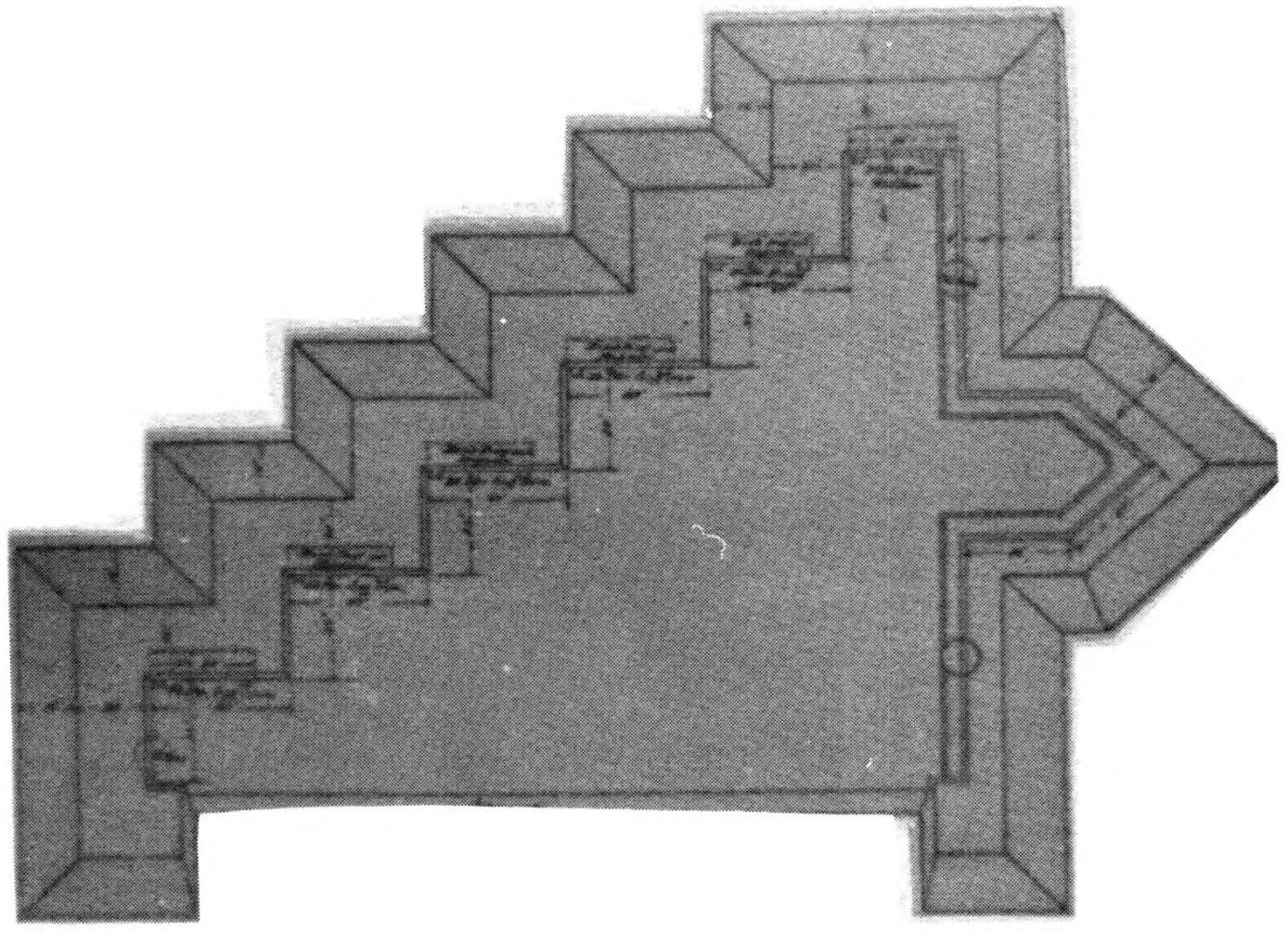 FORT GRIFFIN—This triangular, sawtooth fortification, with 6 guns and 47 defenders, successfully resisted a Federal invasion attempt by 5,000 soldiers in Sept., 1863.
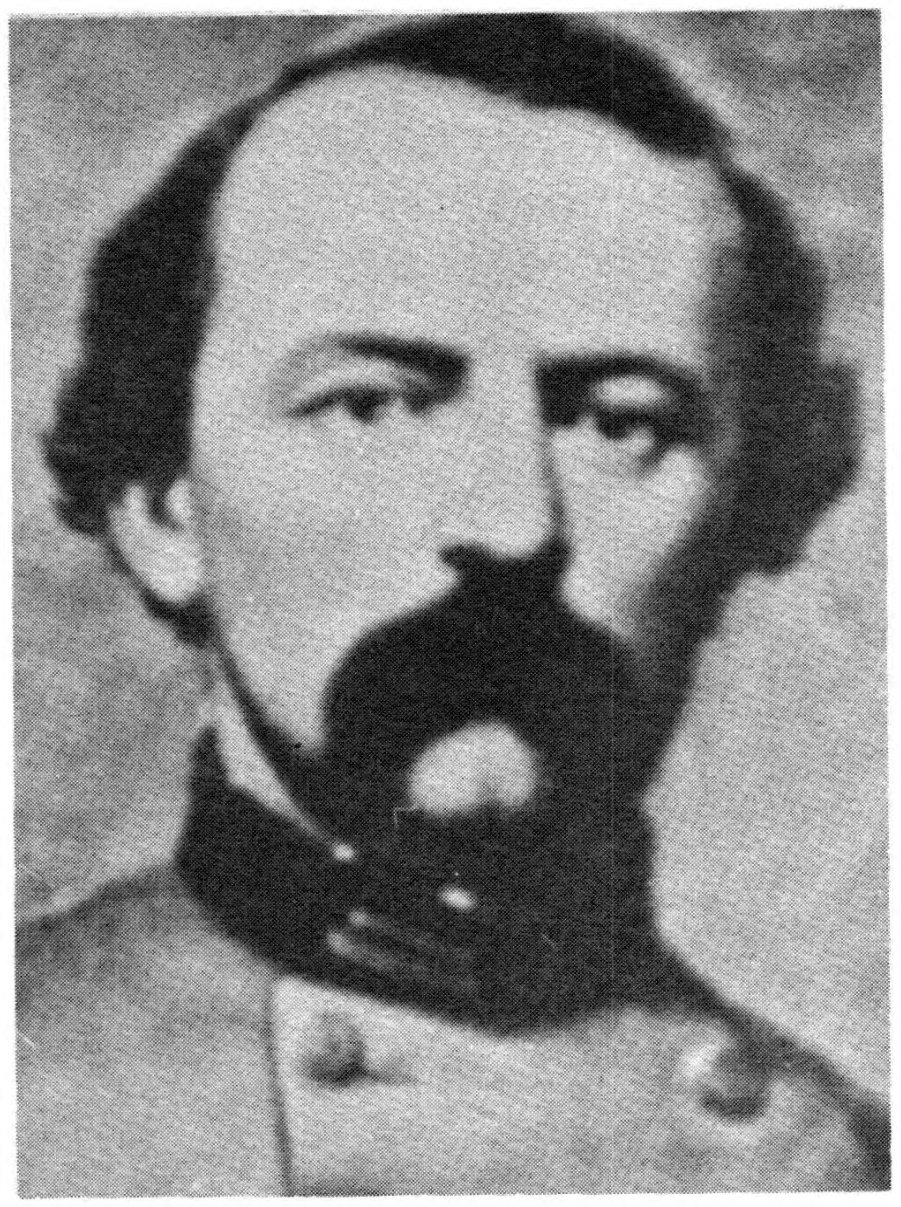 LT. R. W. DOWLING—Sabine ’s legendary Dick Dowling won immortality in 40 minutes in 1863, but did not live long enough to exploit his fame. He died during Houston’s severe yellow fever epidemic of 1867.
Endnotes
1 The War of the Rebellion: A Compilation of the Official Records of the Union and Confederate Armies (Washington, D. C.: Government Printing Office, 1880-1901), Series I, Volume XXVI, Part 2, p. 73; (Houston) Galveston Weekly News, May 13, 1863.
2 H. N. Connor, “The Diary of H. N. Connor,” unpublished manuscript, p. 6, copy owned by Dr. Haskell Monroe, College Station, Texas; Cooper K. Ragan (ed.), The Diary of Captain George W. O’Brien, p. 20, as reprinted from Southwestern Historical Quarterly, LXVIII (January-July, 1963).
3 Official Records, Armies, Series I, Volume XXVI, Part 2, p. 81.
4 J. G. Kellersberger, Erlebnisse Eines Schweizerischen Ingenieurs in Californien, Mexico, und Texas Zur Zeit Des Amerikanischen Burgerkrieges, 1861-1865 (Zurich: Juchli and Beck, 1896), pp. 67-68, photocopy of book owned by the writer.
5 Colonel V. Sulakowski, “No. 109, Fort Sabine,” Map Z-54-7, Record Group 77, National Archives.
6 Kellersberger, Erlebnisse, pp. 68-69. For some unknown reason, Kellersberger enlisted in the Confederate army under the name of Kellersberg.
7 Official Records of the Union and Confederate Navies in the War of the Rebellion (Washington, D. C.: Government Printing Office, 1894-1927), Series I, Volume XX, pp. 149-150.
8 Letter, A. Read to Gideon Welles, Sabine Pass, April 10, 1863, in Official Records, Navies, Series I, Volume XX, p. 128.
9 $ Ibid., pp. 128-129; (Houston) Galveston Weekly News, April 22, 1863.
10 Kellersberger, Erlebnisse, p. 68.
11 Official Records, Navies, Series I, Volume XX, p.
12 (Houston) Tri-Weekly Telegraph, April 24, 1863; (Houston) Galveston Weekly News, April 22, 29, 1863; Official Records, Nauies, Series I, Volume XX, pp. 147-153. The lone Confederate casualty, Lieutenant E. T. Wright of Company D, was killed instantly during the skirmish.
13 (Houston) Galveston Weekly News, May 13, 1863.
14 Volume C, p. 120, April 20, 1863, Commissioners’ Court Minutes, Jefferson County, Texas.
15 Like Beaumont physicians George Hawley and Sylvester Mansfield, E. A. Pye and his wife sacrificed their lives while voluntarily nursing yellow fever patients at Calvert, Texas. See “Letters From The Confederate Medical Service in Texas, 1863-1865,” Southwestern Historical Quarterly, LV (January, 1952), pp. 378-379.
16 “Letters From The Confederate Medical Service in Texas, 1863-1865,“ Southwestern Historical Quarterly, LV (April, 1952), pp. 461, 463.
17 Surgeon James A. White.
18 Letter, Allston to Kirby Smith, Sabine Pass, October 14, 1863, in Official Records, Armies, Series I, Volume XXVI, Part 2, pp. 320-321. The building reputed to have been the Confederate military hospital at Sabine still stands. There was also a slave hospital at Sabine Pass in 1863. See Maps Z-54-2 and Z-54-6, Record Group 77, National Archives.
19 Beaumont Journal, February 25, 1906.
20 Sabine Pass News, April 12, 1902.
21 Ibid.
22 Official Records, Armies, Series I, Volume XXVI, Part 1, p. 311.
23 Ibid., Series I, Volume XXXIV, Part 1, p. 912.
24 Muster Roll, Sabine Pass Guard, April 20, 1861, Texas State Archives; Charles R. Walker, “Spaight’s Battalion, C. S. A.,” Texas Gulf Historical and Biographical Record, VII (November, 1972), p. 30.
25 K. D. Keith, “Memoirs of Captain K. D. Keith” (Luling, Texas; unpublished manuscript, February, 1896), p. 19. Murray, a young, immigrant Scot, probably had had no previous contact with the disease.
26 “Epidemic at Sabine Pass, (Houston) Tri-Weekly Telegraph, September 10, 1862.
27 Official Records, Navies, Series I, Volume XIX, p.
28 Sabine Pass News, April 12, 1902.
29 Official Records, Armies, Series I, Volume XXVI, Part 1, p. 312.
30 Official Records, Navies, Series I, Volume XX, p.
31 Charles C. Nott, Sketches in Prison Camp: A Continuation of Sketches of The War (New York: Anson D. F. Randolph, 1865), p. 88.
32 “Letters From The Confederate Medical Service in Texas,” Southwestern Historical Quarterly, LV, p. 459.
33 Ibid., p. 469.
34 Volume C, p. 102, Commissioners’ Court Minutes, Jefferson County, Texas.
35 Ibid., pp. 110-111, 119. Keith, of Sabine, was also the district clerk and the Confederate collector of war taxes for Jefferson and Chambers counties.
36 Ibid., p. 135.
37 Volume C, pp. 131, 133, Commissioners’ Court Minutes, Jefferson County, Texas.
38 Ibid., pp. 128, 136. In April, 1864, the indigent tax was increased.
39 Ibid., p. 177.
40 Ibid., pp. 185-188.
41 S. G. Reed, A History of The Texas Railroads (Houston: The St. Clair Publishing Company, 1941), p. 86; (Houston) Tri-Weekly Telegraph, April 24, 1865.
42 (Houston) Galveston Weekly News, September 30, 1863.
43 Letter, Sulakowski to Kellersberg, Sabine City, October 5, 1863, in Official Records, Armies, Series I, Volume XXVI, Part 2, p. 299.
44 V. Sulakowski, “No. 116, Coast From Sabine Pass to Galveston,” 1864, Map Z-54-2, Record Group 77, National Archives.
45 Official Records, Armies, Series I, Volume XXVI, Part 2, p. 362.
46 Ibid., pp. 271-272, 336-347, 350-351, 366-367. Because of high charter rates, the Confederate army probably considered buying the Florilda. In October, 1863, Colonel Augustus Buchel wrote that “the steamboat Florilda should be appraised; in three months she will make more from the government at the rate she charges than she is worth.” See p. 367.
47 Official Records, Armies, Series I, Volume XXVI, Part 2, pp. 336, 351, 362; Official Records, Navies, Series I, Volume XX, p. 842.
48 Henry S. McArthur, “A Yank at Sabine Pass,” Civil War Times Illustrated, XII (December, 1973), p. 43; Official Records, Armies, Series I, Volume XXVI, Part 2, p.
49 (Houston) Tri-Weekly Telegraph, November 2, 1863.
50 Official Records, Armies, Series I, Volume XXVI, Part 2, p. 362. As of that date, the Uncle Ben, its guns removed, was running as a transport. Company B was in garrison at Fort Griffin with the Davis Guard (Captain Odium’s company).
51 Ibid., p. 351.
52 Official Records, Armies, Series I, Volume XXVI, Part 2, p. 362.
53 (Houston) Galveston Weekly News, April 29, 1863.
54 Ibid., October 7, 1863; (Houston) Tri-Weekly Telegraph, October 6, 1863.
55 (Houston) Galveston Weekly News, January 26, 1864. Because the Josiah Bell had no Rebel ensign for its masthead, three Sabine women, Mrs. K. D. Keith, Mrs. R. J. Parsons, and Mrs. Samuel Watson, sewed a Confederate States flag and presented it to Captain J. T. Cleveland. See (Houston) Tri-Weekly Telegraph,, January 29, 1864.
56 Official Records, Navies, Series I, Volume XX, pp. 840-841.
57 Ibid., Volume XXI, p. 160.
58 (Houston) Galveston Tri-Weekly News, May 11 and September 14, 1864.
59 Official Records, Armies, Series I, Volume XXVI, Part 2, p. 81.
60 Kellersberger, Erlebnisse, p. 71; Keith, “Memoirs,” p. 26.
61 Official Records, Armies, Series I, Volume XXVI, Part 2, p. 99.
62 “History of Spaight’s Texas Regiment,” as supplied to the Adjutant General’s office, January 18, 1881, in A. W. Spaight Papers, File 2G276, University of Texas library, Austin, Texas.
63 Richard Taylor, Destruction and Reconstruction: Personal Experiences of The Late War (New York: D. Appleton and Company, 1879), p. 135.
64 Official Records, Armies, Series I, Volume XXVI, Part 2, pp. 133-134.
65 Official Records, Navies, Series I, Volume XX, p.
66 Ibid., pp. 555-556; Official Records, Armies, Series I, Volume XXVI, Part 1, p. 303.
67 Official Records, Armies, Series I, Volume XXVI, Part 1, p. 303. Both Captain Keith and Sergeant Connor were highly critical of Colonel Griffin. Keith described him as being “very egotistical and overbearing. He soon got the guardhouse full of men under petty offenses. Court martial became the order of the day.” See Keith, “Memoirs,” p. 26. Following the Battle of Calcasieu Pass, Connor recorded that Griffin “put seven of the boys in the guardhouse for confiscating” a captured Union ham. See Connor, “Diary,” unnumbered, notes of the Battle of Calcasieu Pass.
68 Official Records, Armies, Series I, Volume XXVI, Part 1, pp. 672-675.
69 Ibid., p. 287.
70 Bruce Catton, The Civil War (New York: American Heritage Press, 1971), p. 202.
71 There were at least three reasons. The occupation of Beaumont would sever a principal supply artery to Confederate armies in Louisiana. The Texas and New Orleans railroad offered a supply and invasion route for the capture of Houston and Galveston. The county had become notorious as a successful blockade-running point for cotton and munitions.
72 Let ter, H. H. Bell to Gideon Welles, September 9, 1863, in Official Records, Navies, Series I, Volume XX, pp. 515-516.
73 Ibid p. 555; Official Records, Armies, Series I, Volume XXVI, Part 1, pp. 293-299, 305, 311.
74 Official Records, Armies, Series I, Volume XXVI, Part 1, p. 287.
75 Official Records, Navies, Series I, Volume XX, pp. 521-523.
76 Ibid., p. 555; Official Records, Armies, Series I, Volume XXVI, Part 1, p. 311; Kellersberger, Erlebnisse, p.
77 HOfficial Records, Armies, Series I, Volume XXVI, Part 1, pp. 301, 311.
78 Official Records, Armies, Series I, Volume XXVI, Part 1, p. 309.
79 Ibid., Part 1, pp. 309-312; Part 2, pp. 218-219; (Houston) Tri-Weekly Telegraph, September 15, 17, and October 27, 1863; Official Records, Navies, Series I, Volume XX, pp. 555-561; (Houston) Galveston Tri-Weekly News, September 14, 16, 1863. For the most detailed battle account, see Frank X. Tolbert, Dick Dowling at Sabine Pass (New York: McGraw-Hill Book Company, 1962). See also Andrew F. Muir, “Dick Dowling and the Battle of Sabine Pass,” Civil War History, IV (December, 1958), pp. 399-428, and Alwyn Barr, “Texas Coastal, Defense, 1861-1865,” Southwestern Historical Quarterly XLV (July, 1961), pp. 23-25. There were no Confederate casualties. The Union casualties included 22 killed or died of scald injuries, nine wounded, and 34 missing. See Official Records, Navies, Series I, Volume XX, pp. 554, 542-543; H. H. Hickok,“Battle of Sabine Pass,” (Galveston) Daily News, June 26, 1893.
80 Official Records, Armies, Series I, Volume XXVI, Part 1, p. 297; (Houston) Galveston Weekly News, November 18, 1863.
81 Confederate companies in Jefferson County were frequently at half-complement due to men on detached service. Before the battle, Captain Keith received orders to send half of Company B to serve as artillerists on the gunboat Carr in Matagorda Bay. See Keith, “Memoirs,” p.
82 John F. McCormack, “Sabine Pass,” Civil War Times Illustrated, XII (December, 1973), p. 36.
83 Official Records, Navies, Series I, Volume XX, pp. 555-556.
84 Official Records, Armies, Series I, Volume XXVI, Part 1, pp. 303-305; Part 2, p. 219.
85 Ibid., Part 1, p. 218.
86 Official Records, Navies, Series I, Volume XX, p. 556. Two of the smoothbore guns were soon shipped to Fort Velasco to improve the Brazos River defenses. See Official Records, Armies, Series I, Volume XXVI, Part 2, pp. 247,263.
87 Letter, Yancy to Kirby Smith, Sabine Pass, September 22, 1863, in Official Records, Armies, Series I, Volume XXVI, Part 2, p. 248.
88 Ibid., Part 1, p. 303; Part 2, pp. 247, 281.
89 Ibid., Part 2, p. 281.
90 "Letter, Banks to President Lincoln, October 22, 1863, in Official Records, Armies, Series I, Volume XXVI, Part 1, p. 290. The west fork of Redfish Bayou, which connected Knight’s Lake to the gulf, would have permitted boats to debark troops on high land at the west end or juncture of Sabine’s two ridges. That factor forced the building of Fort Manhassett. The bayou silted over during the hurricane of 1886.
91 Official Records, Armies, Series I, Volume XXVI, Part 2, p. 247; J. Kellersberg, “Plan of Sabine Pass, of Its Defenses and Means of Communication,” Map Z-54-11, Record Group 77, National Archives.
92 Official Records, Armies, Series I, Volume XXVI, Part 2, pp. 270, 289.
93 Ibid., pp. 298-299. Breastworks built at Fort Manhassett were “intended partly to prevent the enemy from deploying his forces after landing, and keeping him . . . within range of the guns of the fort.” See p. 299.
94 J. Kellersberg, “Military Map of Sabine Pass,” October 15, 1863, accompanying the report of Major J. P. Johnson, in Official Records, Armies, Series I, Volume XXVI, Part 2, p. 1133. The same map appears as Map 3, Plate XXXII in Official Atlas of the Civil War.
95 Inspector-general ’s report, Allston to Kirby Smith, October 14, 1863, in Official Records, Armies, Series I, Volume XXVI, Part 2, p. 319. Inspector Allston was unconvinced that Fort Manhassett could fulfill its purpose. Conceding that the redoubts were “well-built, and evince skill and ingenuity,” he added that “too much reliance seems to me to be placed upon the . . . impassable nature of the marsh, which if succeeded in passing, the forts are turned and rendered useless.” See p. 320.
96 "Ibid., pp. 318-321.
97 "Ibid., letter, H. P. Bee to J. B. Magruder, pp. 405-407.
98 "Ibid., p. 376.
99 "Official Records, Armies, Series I, Volume XXVI, Part 2, p. 407.
100 Ibid., p. 563.
101 (Houston) Tri-Weekly Telegraph, December 25, 1863.
102 Marriage Book A—B, Nos. 370, 371, 372, October 29 through November 24, 1863, Jefferson County, Texas.
103 (Houston) Tri-Weekly Telegraph, December 25, 1863.
104 (Houston) Galveston Weekly News, January 26, 1864.
105 O//icia/ Records, Armies, Series I, Volume XXVI, Part 2, p. 321.
106 Connor, “Diary of H. N. Connor,” pp. 23-24.
107 (Houston) Galveston Weekly News, November 22, 1864.
108 Official Records, Armies, Series I, Volume XXXIV, Part 2, p. 1024.
109 Ibid., p. 850.
110 Official Records, Armies, Series I, Volume XXVI, Part 2, p. 518; Ragan (ed.), Diary of Captain George W. O’Brien, pp. 15, 61; Connor, “Diary of H. N. Connor,” p.
111 “History of Spaight’s Texas Regiment,” University of Texas library, Austin, Texas; Official Records, Armies, Series I, Volume XXXIV, Part 3, p. 800.
112 2Official Records, Armies, Series I, Volume XXXIV, Part 3, p. 800; Paul C. Boethel, The Big Guns of Fayette (Austin:Von Boeckman -Jones Company, 1965), pp. 43-44.
113 (Houston) Tri-Weekly Telegraph, October 27, 1862; Charles R. Walker, “Spaight’s Battalion, C. S. A.,” Texas Gulf Historical and Biographical Record, VIII (November, 1972), p. 34, from muster rolls of 1863 transcribed by Cooper Kirby Ragan.
114 Walker, “Spaight’s Battalion,” Texas Gulf Historical and Biographical Record, p. 36.
115 L oss of Company A, in Connor, “Diary of H. N. Connor,” unnumbered appendix.
116 Letter, Marchand to Farragut, April 16, 1864, ii» Official Records, Navies, Series I, Volume XXI, p. 197; Boethel, Big Guns of Fayette, p. 45.
117 (Houston) Daily Telegraph, August 19, 1864.
118 Ibid., August 8, 1864.
119 Unofficial Records, Armies, Series I, Volume XLVIII, Part 2, p. 426.
120 Keith, “Memoirs of Captain K. D. Keith,” p. 21.
121 Official Records, Armies, Series I, Volume XXVI, Part 2, p. 284.
122 Ibid., p. 347.
123 Ibid., Volume XXXIV, Part 2, p. 1025. In November, 1863, Colonel Griffin’s cavalrymen captured W. Griffith, “the bridge-burner,” Desire LaBove, “a deserter,” and Joseph Ritchie, a “dangerous character ... in the service of the Yankees,” in Southwest Louisiana and sent them under arrest to Houston. See (Houston) Galveston Weekly News, November 18, 1863, and Official Records, Armies, Series I, Volume XXVI, Part 2, p. 400.
124 Official Records, Navies, Series I, Volume XXI, p.
125 Ibid., p. 246.
126 Ibid., pp. 256-257.
127 Official Records, Armies, Series I, Volume XXXIV, Part 2, pp. 806-808.
128 “History of Spaight’s Texas Regiment,” University of Texas library, Austin, Texas.
129 Connor, “Diary of H. N. Connor,” p. 25; Joseph A. Brickhouse, “Battle of Calcasieu Pass,” Beaumont Enterprise, May 9, 1909; Alwyn Barr, “The Battle of Calcasieu Pass,” Southwestern Historical Quarterly, LXVI (July, 1962), pp. 60-64; Boethel, Big Guns of Fayette, pp. 48-49; W. T. Block, “Calcasieu Pass,” East Texas Historical Journal, IX (October, 1971), pp. 140-141.
130 (Houston) Galveston Weekly News, May 10, 1864; Connor, “Diary of H. N. Connor,” p. 26; Beaumont Enterprise, May 9, 1909, a participant account; Official Records, Navies, Series I, Volume XXI, pp. 255-259; J. T. Scharf, History of The Confederate States Navy (New York: Rogers and Sherwood, 1887), pp. 527-528; Boethel, Big Guns of Fayette, pp. 51-60.
131 (Houston) Galveston Weekly News, June 22, 1864; Official Records, Navies, Series I, Volume XXI, pp. 251-260; Official Records, Armies, Series I, Volume XXXIV, Part 1, pp. 912-914; Barr, “Battle of Calcasieu Pass,” Southwestern Historical Quarterly, pp. 64-67; Beaumont Enterprise, May 9, 1909; Boethel, Big Guns of Fayette, pp. 60-62. There was no further report of jayhawker activities along the Calcasieu.
132 (Houston) Tri-Weekly Telegraph, March 10, 1865.
133 “Letters From The Confederate Medical Service,” Southwestern Historical Quarterly, (April, 1952), p. 469.
134 ( Houston) Tri-Weekly Telegraph, April 24, 1865.
135 “Letters from The Confederate Medical Service,” Southwestern Historical Quarterly, p. 466.
136 “Letters From The Confederate Medical Service,” Southwestern Historical Quarterly, p. 469.
137 Ibid., p. 462.
138 Ibid.
139 (Houston) Galveston Weekly News, August 8, 1864.
140 “Letters From The Confederate Medical Service,” Southwestern Historical Quarterly, p. 472.
141 “Letters From The Confederate Medical Service,” Southwestern Historical Quarterly, p. 470.
142 “History of Spaight’s Texas Regiment,” University of Texas library, Austin, Texas; Official Records, Armies, Series I, Volume XLVIII, Part 2, pp. 1284, 1298; Ragan (ed.), Diary of Captain George W. O’Brien, pp. 7,16.
143 Official Records, Armies, Series I, Volume XLVIII, Part 1, pp. 1356-1357.
144 Ibid., Part 2, pp. 1287, 1297.
145 Ibid., Part 1.p. 1356.
146 Connor, “Diary of H. N. Connor,” p. 34.
147 (Houston) Tri-Weekly Telegraph, May 3, 1865.
148 Unofficial Records, Armies, Series I, Volume XLVIII, Part 1, p. 1356.
149 Ibid., Part 2, p. 426.
150 Ibid., p. 1284.
151 ISljbid., p. 1298. The surmise on desertions is based on “aggregates present** for duty.
152 Scharf, History of The Confederate States Navy, p.
153 W. T. Block, “Sabine Pass in The Civil War,” East Texas Historical Journal, IX (October, 1971), p. 134.
154 H. N. Connor, who had been in Hardiman’s Brigade for nine months, rejoined Company A at Beaumont in time to be discharged on May 25, 1865? Expressing the bitterness of Confederates everywhere, he ended his diary with a barrage of eloquent prose, blaming the Confederacy’s fall on “political corruption” rather than on superior power.
155 Scharf, History of The Confederate States Navy, p.
156 (Houston) Tri-Weekly Telegraph, June 5, 1865.
157 Official Records, Armies, Series I, Volume XLVIII, Part 2, p. 1062.
158 Ibid., p. 1072.
159 The writer has no information concerning the number of Jefferson County soldiers who died east of the Trans-Mississippi Department, but it is known that perhaps one hundred county residents participated in the campaigns of those regions. The death list as known includes: from Spaight’s Battalion, Company A-L. E. Keller, A. S. Winston, W. T. Joynor, Thomas Lynch, I. A. McDonaugh, Albert Sparks, John Culmell (all of Sabine Pass), John Graham, H. H. Humble, M. Johnson, Samuel Moore, N. J. Harrison, W. B. Champion, and Levi Curl; from Company E-John Andrew McFaddin and Samuel McKee (both killed in Louisiana), Alvertus Barnes, Henry Rowley, and James Daniel. Several from Company B died of yellow fever at Sabine, but only Lieutenants R. J. Parsons, Goodnoe, and Concannon are known by name. No list is known to exist. Keller, Winston, Joynor, Champion and Curl were also yellow fever victims. Barnes died at the residence of William McFaddin in 1863. H. V. C. Edmondson of Sabine was killed at Vicksburg. See Files 9, 63, 120, Probate Record, Jefferson County, Texas.
160 Texas Almanac, 1862, p. 32; Texas Almanac, 1867, p. 211.
161 Texas Almanac, 1861, p. 237; Texas Almanac, 1867, pp. 124-125.